The Welcome Email Sequence I Wish I Had Built Sooner
I ignored my welcome email sequence for way too long. I sent one polite “thanks for joining” email, dropped in a link, and expected that tiny message to do all the heavy lifting.
Then I built a real sequence, and email started working the way I thought it should. I made a better first impression, built trust faster, and turned new subscribers into readers and buyers without sounding pushy.
That one change made everything simpler, so here’s the structure I wish I’d used from day one.
Why I stopped relying on one lonely welcome email
I used to treat welcome emails like receipts. Someone signed up, they got confirmation, and I was done. I thought the hard part was getting the opt-in.
The truth was less flattering. I was leaving new subscribers alone at the exact moment they were most interested. They had raised their hand, and I answered with one forgettable note.
What one email can do well, and where it falls short
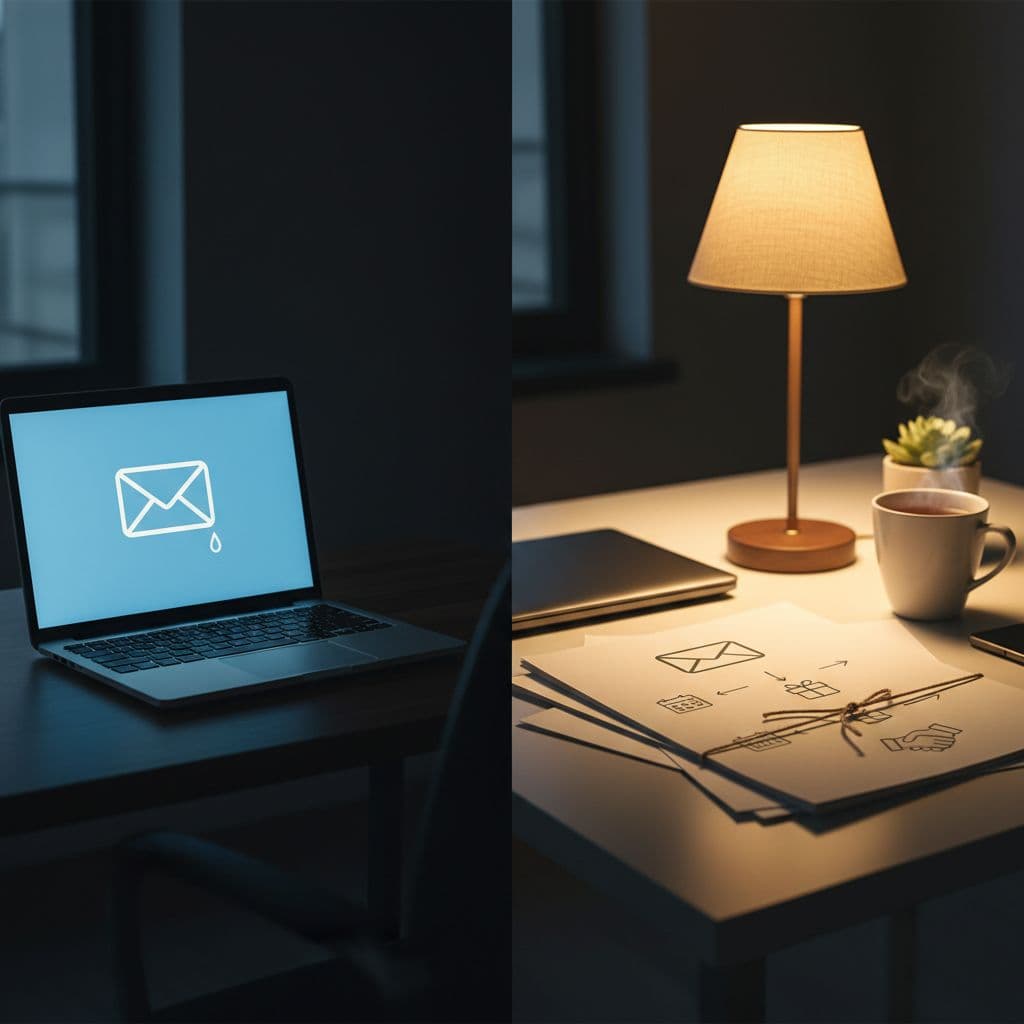
One welcome email can do a few things well. It can confirm the signup, deliver the freebie, and say hello. That’s useful.
But that same email can’t do everything else without turning into a mess. It can’t introduce me, explain what I do, show my best work, answer objections, build trust, and lead to an offer, all in one shot.
That was my mistake. I kept stuffing one email with too many jobs. I added the download, my story, a few links, a sales mention, and sometimes a reply request. It looked helpful. It felt crowded.
Most new subscribers don’t know me yet. They haven’t read every post. They haven’t seen proof. They barely remember why they signed up if life got busy five minutes later. If that first email gets missed, or skimmed, or buried, I’m done.
A single welcome email is a handshake. That’s all. It isn’t a relationship, and it isn’t a path.
The shift that made me see the value of a full sequence
The turning point was simple. I realized I was asking cold subscribers to make warm decisions.
I was spending time polishing sales emails while ignoring the stretch before the sale. That’s backwards. People need context before they need a pitch.
Once I started thinking in a sequence, things clicked. Timing matters. Repetition matters. Clarity matters. A series of short emails gave me room to say one thing at a time, instead of trying to say everything at once.
A welcome sequence isn’t more noise. It’s a clearer path for the right reader.
I also started spacing emails across the first 10 to 14 days. That gave new subscribers a real introduction to my world. Not a rush, not radio silence, something in the middle that felt natural.
The 9-part welcome email sequence I use to turn new subscribers into buyers
A 9-part welcome email sequence gives me space. Space to connect, teach, build trust, and make an offer without rushing any part of it.
If I were starting over today, I’d use this 9-part welcome email sequence. The templates save me from the blank page, and they keep the flow moving in the right order.
How the sequence gently moves readers from welcome to sales
A good sequence follows how people make decisions. First they want reassurance. Then they want something useful. After that, they want proof, clarity, and a reason to act.
So I don’t turn email two into a pitch. I warm things up. I might share the short version of my story, point them to one strong resource, or solve a small problem fast. Each email earns the next one.
That’s what makes a longer welcome sequence work. It doesn’t shove people toward a sale. It walks them there.
By the time I mention an offer, it doesn’t feel random. It feels connected to everything that came before it. That matters more than people think.
And not every subscriber needs to buy. That’s fine. A strong sequence also helps the wrong people drift away early, which saves me from chasing clicks that were never going to turn into anything.
What each email should help you do
This is the simple structure I come back to:
| Main job | What it builds | |
|---|---|---|
| 1 | Welcome them and deliver the promised freebie | Relief and a strong first impression |
| 2 | Share a short personal story | Connection |
| 3 | Give one useful tip or quick win | Early value |
| 4 | Point to my best content | More interest |
| 5 | Name the problem they’re dealing with | Relevance |
| 6 | Answer common doubts | Confidence |
| 7 | Share proof or a real example | Trust |
| 8 | Introduce the offer | Curiosity |
| 9 | Invite them to take action | Movement |
That’s the whole point. Each email gets one job. When I write that way, the copy gets better fast.
I also don’t send all nine emails in a blur. I send them a bit closer together at the start, then give more breathing room. That pacing helps the sequence feel helpful, not heavy.
Nine emails might sound like a lot if you’ve been sending one. It isn’t. It’s a full conversation, broken into easy parts. And if writing nine emails feels like a chore, the ready-made templates at The Rising Entrepreneur take a lot of pressure off.
How I write welcome emails people actually want to open
I don’t try to sound polished in welcome emails. I try to sound clear. That’s a big difference.
People open emails that feel human. They ignore emails that sound like they were approved by five people and written by none of them. So I keep my tone plain, direct, and warm.
I also keep subject lines simple. “Welcome.” “A quick note.” “This will help.” “What to do next.” I want curiosity, not confusion. My preview text follows the same rule. No tricks, no bait, no fake mystery.

What I say in the first email to set the right tone
My first email does four things. It thanks them, gives them what they asked for, sets one expectation, and points to one next step.
That’s it.
I don’t unload my whole backstory. I don’t stack five links. I don’t start selling before they’ve even had a chance to remember my name.
Sometimes the next step is small, and that’s enough. Read this post. Hit reply and tell me what you’re working on. Save this resource for later. One action is plenty.
A good first email feels like a host opening the door. It says, “You’re in the right place.” It doesn’t say, “Now that you’re here, let me pitch you six things.”
The small details that make a welcome sequence feel personal
The small stuff does more work than people realize. I write to one person, not a crowd. I use plain words. I keep paragraphs short. Each email focuses on one clear idea.
I also make the emails easy to skim. White space helps. So do short sentences. If someone opens my email while waiting in line for coffee, they should still get the point in seconds.
Another thing I watch is honesty. If the subject line promises a quick tip, the email gives a quick tip. If I ask for a reply, I mean it. That kind of consistency builds trust faster than fancy copy ever will.
When welcome emails feel personal, opens improve, replies feel warmer, and clicks make more sense. Not because the copy is smarter, but because it sounds like a real person wrote it.
What changed after I finally built the sequence
Once I had the sequence in place, email marketing stopped feeling like a scramble. New subscribers had a path. I wasn’t waking up and wondering what to send next.
My sales emails also got stronger, because they weren’t trying to do all the trust-building alone. By the time I made an offer, readers already knew my voice, my story, and the problem I help solve.
I also noticed something less obvious. I felt better sending emails. That’s not a small thing. I wasn’t forcing awkward transitions from free content to paid offers, because the bridge was already there.
And yes, it saved time. I built the sequence once, improved it over time, and let it do its job. That’s a lot easier than reinventing my welcome every week.
If I could go back, I’d build this sooner. New subscribers are paying the most attention right after they join. Letting that window go cold is a waste. If you want the fastest route, start with the 9-part welcome email sequence templates. They turn “I should probably set this up” into something you can use.
Conclusion
A welcome sequence isn’t extra. It’s the foundation of a strong email list.
One email can say hello, but it can’t build trust, explain my value, and lead someone toward a purchase on its own. That’s why the longer flow works. It gives every message room to do its job.
The lesson I learned late was simple: a strong welcome sequence makes every email that comes after it easier. If you’re still relying on one lonely welcome email, build your own sequence now, or start faster with the templates at https://therisingentrepreneur.com/from-welcome-to-sales-email-templates/.